New Products and News
Innovate, Excel, Deliver
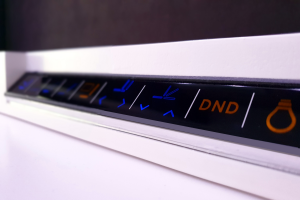
WASP RECOMMEND SAFE SURFACES
The reduction of the number of shared surfaces available to passengers is one opportunity to prevent cross contamination explored by WASP. Add to this a contactless control pad and the potential for viral spread is reduced even more.
Customisable according to requirements, new capacitive keypads are also suitable for cleaning with anti-bacterial sprays and wipes. In a recent application, the control has been embedded within an armrest and is accessed via a hinged cover preventing accidental contact by anyone other than the person using the seat during the flight.
The ultra sensitive capacitive screen detects finger proximity without requiring pressure. Carriers can specify the functions required which can include seat/suite control, lighting control, entertainment options and cabin crew requests. The bezels used to mount the screens are available in a wide range of materials, colours and finishes including anti-microbial.
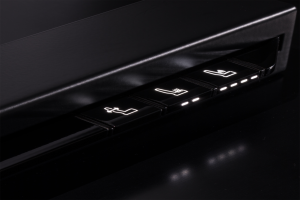
FUTURE PROOF FINISHES FROM WASP
Even though WASP have always offered customers a choice of finishes in their seat, suite and lighting controls with regard to material and colour ranging from glossy glass like appearances to gold plating, recent events have led to their customers investigating new coatings and materials.
With more emphasis on the use of anti-bacterial wipes and sprays, WASP are keen to highlight that their already highly specified sealing methods are capable of coping with the challenging protective and cleansing liquids which are becoming more commonly used. The materials which they currently use have also been tested to ensure that they are suitable for use with longer lasting anti-microbial coatings which have been developed during the past few months.
Going forward, WASP believe that simply not touching at all is the ideal solution, hence their commitment to their capacitive products with their smooth, seam free surfaces, however, environmental and tactility preferences do not always match the contactless solution, so they are continuing to offer their tried and tested alternatives which will suit modern cleaning methods and hygiene controls.
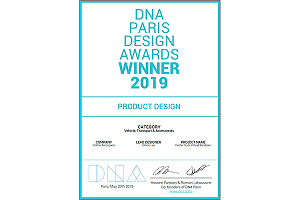
VIRTUAL WINDOWS WIN DESIGN AWARD
At the DNA Paris Design Awards WASP, Managing Director and Lead Designer Simon Lee, was awarded a coveted Winners Certificate for his work on the Virtual Windows system used on the Emirates 777.
Awarded for Product Design in the Vehicle, Transport and Accessories category, WASP's virtual windows are a major design success. When looking "through" them, the passenger, sees what is apparently a normal window, but what they are actually seeing are high resolution images projected from outside the plane on to what is essentially a screen, from fibre-optic cameras fixed to the plane's exterior.
Making the aircraft lighter, faster, more fuel-efficient, and more structurally sound, the virtual windows from WASP are currently being assessed by a number of other carriers.
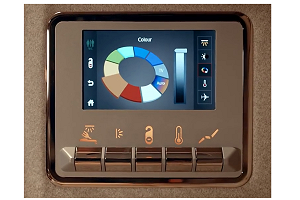
WASP LIGHTING SYSTEM PUTS THE PASSENGER IN CONTROL
The attractive and intricately designed PCU in the Emirates 777 First Class suite provides the passenger with complete control over their individual heating and lighting requirements due to WASP's innovative temperature and mood lighting software and a suite lighting system which enables the passenger to command their own ambient lighting simulations, including dynamic sunset and sunrise.
Although the system allows full individual suite lighting control it is also includes the capability of full aircraft cabin lighting system interaction. WASP are proud to have supplied the seat controls, feature lighting and virtual windows for this 'Game Changing' suite.
WASP ACHIEVE AS9100 REV D
Through their commitment to quality via their controls and procedures both in manufacturing and administration, Wessex Advanced Switching Products – WASP – have achieved AS9100 RevD certification.
As a leading manufacturer of passenger aircraft seat/suite controls, cabin lighting systems and virtual windows, all of which are used by most of the world's leading airlines, WASP are maintaining their high levels of customer service through the achievement of AS9100 RevD.
WASP MANUFACTURE VIRTUAL WINDOWS FOR EMIRATES
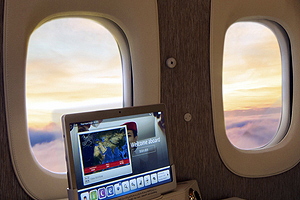
The virtual windows found in the first-class cabin of Emirates' newest Boeing 777-300ER are made by WASP as part of their considerable input into this latest flying experience which also includes lighting, seat and other suite controls.
The virtual windows look like normal see-through glass, but have real time high resolution images projected from outside the plane on to them from fibre-optic cameras fixed to the plane's exterior. The removal of the normal windows makes aircraft lighter, faster, more fuel-efficient, and more structurally sound.